Security Officers vs. Police Officers: Which Does Your Texas Property Need?
Security Officers Working With Police Officers
- Written by Deltacon Admin
- Published
- 4 min read
A distribution center may need an officer at the truck gate around the clock. A concert venue may need several officers to screen guests and manage lines, plus off-duty police for traffic control and law enforcement response. Both clients need security coverage, but the right staffing plan depends on what each officer will be expected to do.
Private security officers protect the people, property, and operations covered by their assignment. Police officers have statutory authority to enforce the law and investigate crimes. Understanding that difference helps businesses and government agencies decide when to hire unarmed security, when to consider armed security, and when to bring in off-duty police.
How Private Security and Police Compare in Texas
Private security officers help protect people and property at an assigned site. They deter misconduct, manage access, patrol buildings and parking areas, and respond to incidents according to site procedures. Depending on the assignment, they may check credentials, verify deliveries, monitor security cameras, assist visitors, and document incidents. They can apply lawful property access rules on a client’s behalf. A security contract cannot grant them police powers.
Police officers protect public safety, enforce laws, and investigate suspected crimes. Their duties can include making lawful arrests and directing traffic when authorized. They exercise peace officer authority within the limits of applicable law and jurisdiction. When hired for an off-duty assignment, they must also follow their agency’s policies.
Texas regulates the two professions through separate agencies. The Texas Department of Public Safety oversees private security. Level II is the basic training for noncommissioned security officers, while commissioned security officers generally must also complete Level III training, which includes firearms qualification. The Texas Commission on Law Enforcement licenses Texas peace officers. Obtaining a peace officer license and receiving an agency appointment are separate steps.
Texas law gives private individuals limited warrantless arrest authority when they witness certain offenses, including felonies and offenses against public peace. That narrow authority differs from a peace officer’s statutory powers. An armed security commission authorizes an officer to carry a firearm under applicable rules. It does not confer police authority. For clients, the practical step is to spell out when security staff should disengage, notify a supervisor, or call 911.
When to hire unarmed security, armed security, or off-duty police
Unarmed security is often a good fit when the main needs are a visible presence, access control, visitor assistance, and routine patrol. An unarmed officer at a government office might check visitor credentials, monitor the lobby, document disturbances, and call for assistance when an incident escalates.
Armed security may be appropriate when a site assessment identifies an elevated threat or a need to protect sensitive areas or high-value assets. The officer may still spend most of the shift checking access, patrolling, and reporting incidents. The decision to staff an armed post should reflect the site’s risks, the duties of the post, and the client’s policies.
Off-duty police may be appropriate when an assignment calls for peace officer authority, such as authorized traffic direction on public roads or an on-site law enforcement presence at a major event. Before including off-duty police in the staffing plan, confirm that the assignment and duties are permitted by the officers’ agency. The Houston Police Department, for example, places conditions and restrictions on extra employment.
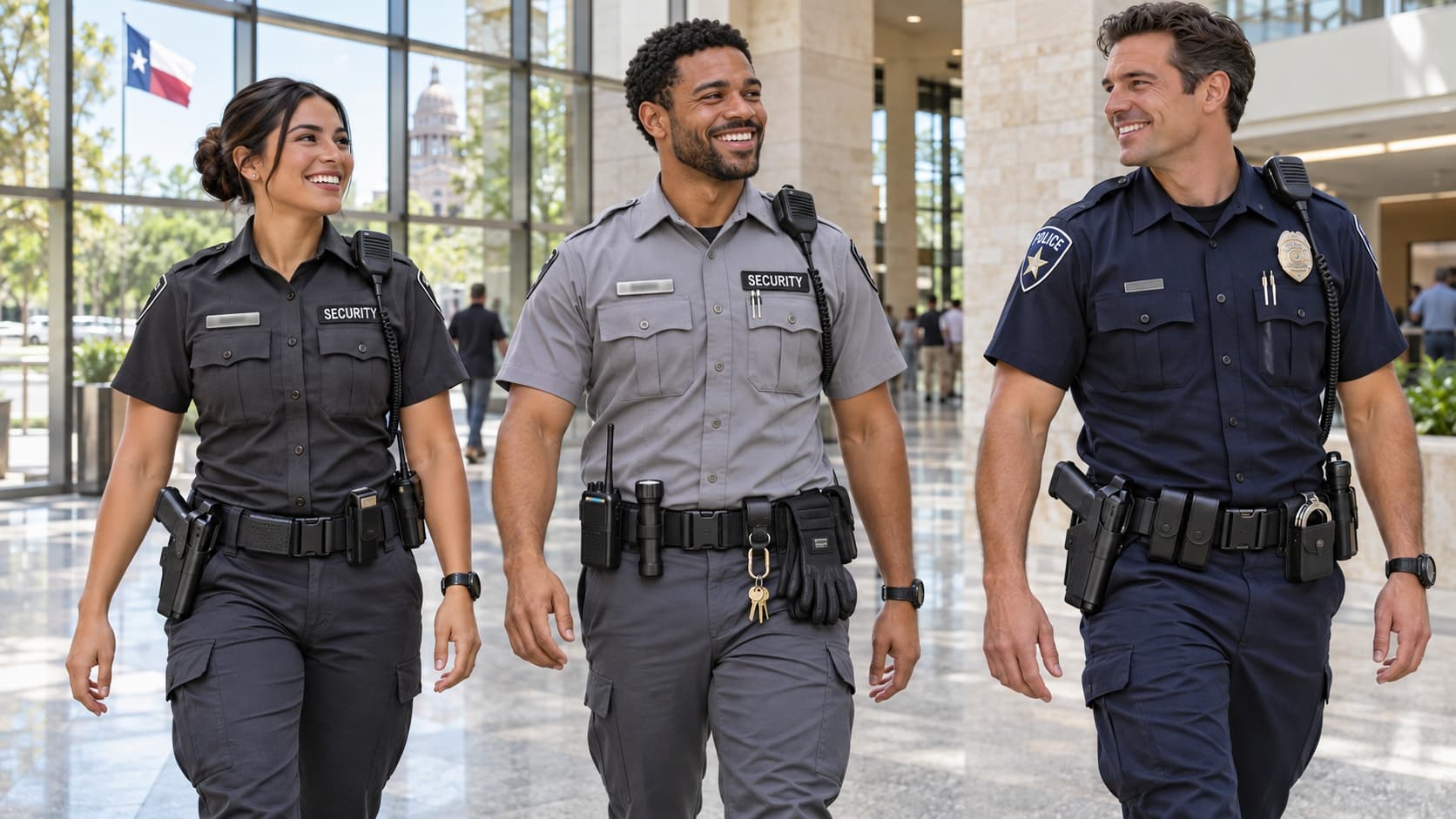
When private security and off-duty police work side by side
Some assignments call for unarmed and armed private security officers working alongside off-duty police officers. At a civic center hosting a sold-out event, for example, unarmed officers can screen guests, manage entry lines, and check credentials. Armed security officers can cover designated restricted areas if the venue’s risk assessment calls for it. Off-duty police can handle approved traffic assignments and take the lead when an incident requires law enforcement action.
The same approach can work at a commercial distribution center or a government facility. Private security can manage gates, visitor access, and patrols throughout the shift. Off-duty police can cover defined hours or duties that call for law enforcement. Before the first shift, the client and both teams should agree on who covers each post, how they communicate, and who takes the lead if an incident escalates.
Plan your coverage with Deltacon Security
Deltacon Security has experience staffing armed and unarmed private security officers and coordinating off-duty police coverage for government and commercial clients. Whether you’re planning a public event, protecting a distribution center, or reviewing security at a government facility, we can help you match each post to the duties, authority, and coverage hours it requires.
Request a security staffing consultation. Tell us your location, coverage hours, and the concerns you need addressed. We’ll help you determine the right mix of personnel for your site.
Call 832-247-7457 · Email info@deltacon1.com · Visit www.deltacon1.com