Workplace Violence Prevention: A Practical Guide for Businesses and Organizations
Workplace Violence Prevention
- Written by Deltacon Admin
- Published
- 5 min read
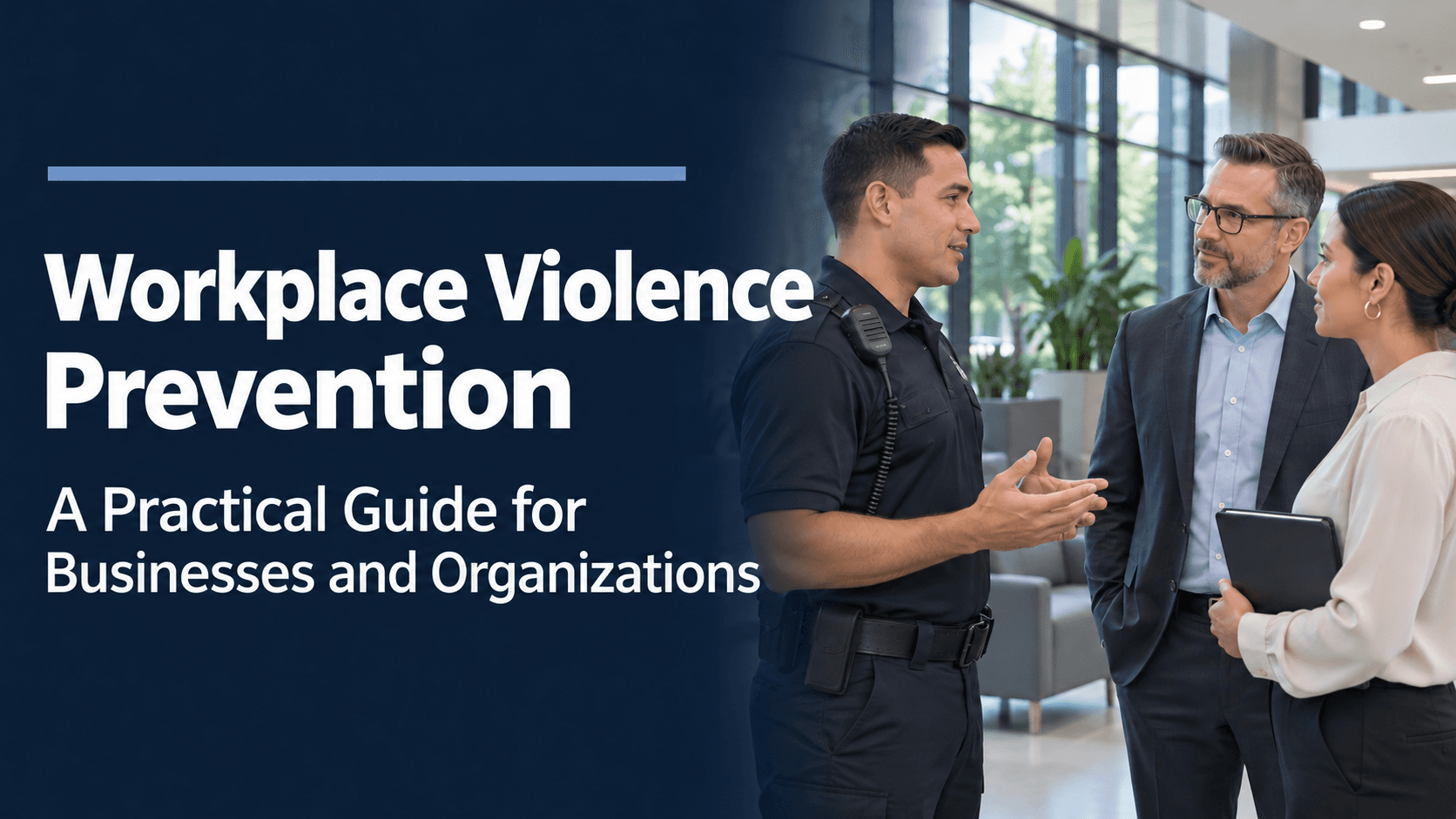
Workplace Violence Prevention: A Practical Guide for Businesses and Organizations
A threatening customer. An escalating employee dispute. An unauthorized visitor who refuses to leave. A domestic conflict that follows someone to work.
Workplace violence can begin with situations that appear manageable—until employees realize they do not have the training, procedures, or security support to respond safely.
For business owners, facility managers, and organizational leaders, prevention means preparing before a confrontation becomes an emergency. A coordinated approach can help protect employees, customers, and visitors while supporting business continuity.
At Deltacon Global Inc. DBA Deltacon Security, we believe effective protection starts with understanding your people, your property, and the risks surrounding your operations.
Understanding Workplace Violence
Workplace violence extends beyond physical assaults. OSHA’s definition includes threats, harassment, intimidation, and other threatening conduct at the worksite. It can involve employees, customers, patients, contractors, visitors, or people with a personal connection to someone at the facility.
For an organization, the consequences can reach far beyond the immediate incident: disrupted operations, employee anxiety, absenteeism, property damage, and lost confidence in management.
A credible prevention program helps employees understand what to report, gives managers a consistent response process, and establishes clear responsibilities when concerns arise.
Where Is Your Organization Most Vulnerable?
Risk varies by location, industry, operating hours, and the people a facility serves. OSHA identifies public interaction, cash handling, isolated work, and late-night operations among the factors that can increase exposure.
Consider these questions:
Can someone enter your workplace without being acknowledged or screened?
Do employees work alone, open or close the facility, or cross isolated parking areas?
Are receptionists and frontline staff expected to handle aggressive individuals without support?
Do employees know how to report threats, stalking, or intimidating behavior?
Is there a coordinated plan for a high-risk separation or a known threat?
Does someone review incident reports and follow up on recurring concerns?
If the answers are unclear, your organization has an opportunity to strengthen its protection before a serious incident occurs.
Six Practical Steps to Strengthen Prevention
1. Establish Clear Policies and Reporting Procedures
A written policy should explain unacceptable conduct, reporting options, emergency procedures, and who is responsible for reviewing concerns.
Provide more than one reporting route so employees have an alternative when a concern involves their immediate supervisor. Explain that good-faith reports will be taken seriously and retaliation will not be tolerated.
Handle sensitive information discreetly and share it according to operational and legal needs. Avoid promising absolute confidentiality that an investigation or emergency response may make impossible.
2. Assess Your Facility and Daily Operations
A useful security assessment examines how the workplace actually functions.
Review entrances, reception areas, parking lots, loading docks, isolated workspaces, employee arrival and departure times, and visitor procedures. Include past incidents, near misses, and employee feedback.
For example, a reception desk may have cameras but no practical way to summon assistance. A secure front entrance may offer little protection if a delivery door is routinely propped open.
The objective is to identify practical improvements and prioritize them according to risk.
3. Combine Physical Protection With Consistent Procedures
OSHA recommends combining workplace assessment, physical safeguards, operating procedures, and training to reduce violence hazards.
Depending on your facility, improvements may include:
Controlled entrances and visitor verification.
Better lighting around parking areas and walkways.
Cameras positioned to support observation and incident review.
Duress alarms with a clearly assigned response.
Procedures for lone workers and opening or closing shifts.
Security patrols focused on vulnerable areas and times.
Technology works best when someone is responsible for monitoring it, responding to alerts, and documenting what happens.
4. Train Employees to Recognize and Report Concerning Behavior
Employees should know how to report specific conduct, including threats, stalking, repeated intimidation, attempts to bypass security, or statements suggesting plans to harm someone.
Focus on observable behavior and context. A disagreement, personal hardship, or mental health condition alone does not establish that someone poses a threat.
Training should also teach employees how to maintain distance, communicate calmly, seek assistance, and disengage when a situation becomes unsafe. Staff should never feel obligated to physically intervene or investigate a threat themselves.
5. Coordinate Threat Assessment and Follow-Up
Serious concerns require a coordinated response. Depending on the organization, this may involve management, HR, security, legal counsel, qualified behavioral threat assessment professionals, and law enforcement.
The Secret Service’s National Threat Assessment Center emphasizes identifying concerning behavior, assessing the circumstances, and managing risk through appropriate intervention. Its research also supports incorporating behavioral threat assessment into workplace violence prevention planning.
Reporting is the beginning of the process. Assign responsibility for reviewing concerns, deciding protective measures, documenting actions, and checking whether those measures remain effective.
6. Prepare for Emergencies and Recovery
Employees need clear instructions for obtaining help and taking protective action. Establish procedures for emergency notifications, evacuation or sheltering, accounting for personnel, and coordinating with first responders.
After an incident, address medical needs, employee support, evidence preservation, and corrective action.
When there is immediate danger, call 911 as soon as it is safe to do so.
Why Professional Security Makes a Difference
A security officer’s value depends on preparation, judgment, communication, and the support behind the assignment.
Professional security can help organizations:
Maintain a visible protective presence.
Verify visitors and enforce access procedures.
Recognize and report concerning activity.
Support de-escalation within the officer’s training and authority.
Assist with employee escorts and planned security coverage.
Document incidents and communicate with management.
Guide emergency access and coordinate with responding authorities.
The right coverage should reflect the property’s risks. Some facilities need an approachable officer at reception; others require armed coverage, mobile patrol, or additional protection during specific hours or situations.
High-caliber security means placing the right personnel in the right role, with clear instructions and accountable oversight.
Why Contact Deltacon Security?
Your employees should not have to improvise a security response while trying to do their jobs. Your managers need dependable support, clear reporting, and officers who understand the environment they are protecting.
Deltacon Security provides licensed armed and unarmed security officers, mobile patrol, emergency response, and on-site security training for businesses and communities across Texas.
Our veteran-founded organization combines security personnel with 24/7 operations support, site-specific direction, and supervisory oversight. We work with clients to connect security coverage to their operating hours, access requirements, employee concerns, and property risks.
Whether you manage a retail property, healthcare facility, office, warehouse, construction site, or government location, we can discuss protection suited to your environment.
Strengthen Your Workplace Security Before the Next Incident
Do not wait for a threatening encounter to discover a gap in your protection.
Contact Deltacon Security to discuss a facility security assessment, review your current coverage, or request a tailored security services proposal. Tell us about your location, operating hours, and concerns so we can help identify practical next steps.
Call: 832-247-7457
Email: info@deltacon1.com
Website: www.deltacon1.com
Request Services: Discuss Your Security Needs
Deltacon Security
Trusted to be there… when it matters.